There is something about the first real warmth of spring that makes the whole homestead feel as though it has suddenly taken a deep breath.
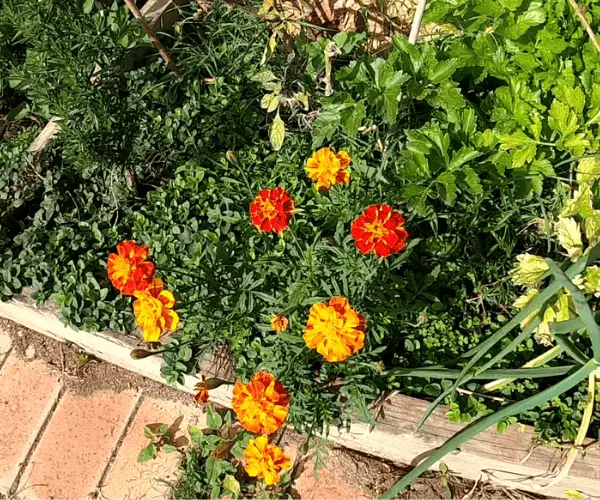
After months of cold mornings, the marigolds are now blooming all over Wildhorse Homestead, thanks in part to Elsie’s Flowers, and the little posies De Wet brought me before winter have surprised us by self-seeding and returning to bloom all over again.
It feels like the garden is waking up.
And with the flowers comes movement.
The insects are back, the birds are busy and the kookaburras have been spending an unusual amount of time around the birdfeeder. We know they aren’t there for the seed — kookaburras are carnivores — so we’re beginning to suspect they have discovered something even more interesting.
The birdfeeders are attracting smaller birds, which in turn are part of a much bigger little ecosystem, bringing insects and other forms of life into the area.
It is one of those wonderfully simple examples of biodiversity in action.
We don’t always need to intervene or control everything. Sometimes we just need to create the right conditions and allow nature to do what nature does best.
Have you noticed any unexpected visitors or little changes in your garden as spring arrives? I’d love to hear what is happening where you are.
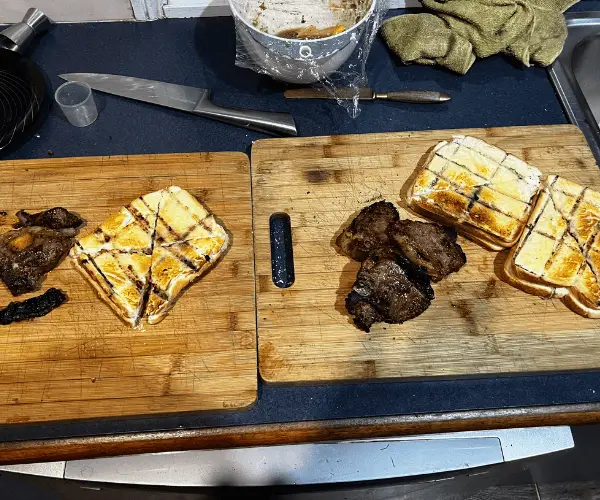
🔥 A Taste of South Africa
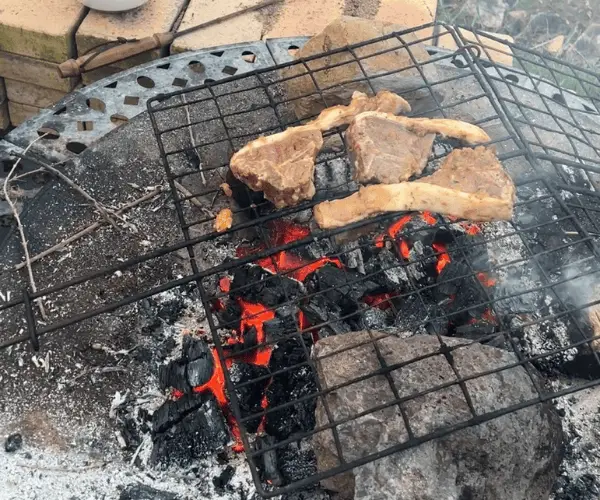
There was another reason to celebrate at Wildhorse this week, and this one came with the unmistakable smell of a braai drifting across the property.
We celebrated De Wet’s South African heritage with a proper South African braai — Boerwors, Braaibroodjies, lamb chops and Sous, along with a special lamb marinade inspired by the braais his Dad used to make.
Of course, there is always the Rugby to celebrate, but this particular celebration was also about family, heritage and those traditions that somehow become woven into who we are.
Food has a remarkable way of carrying those stories forward.
A recipe can be much more than a list of ingredients. It can carry a place, a childhood memory, a family gathering and the people who taught us how to make it.
This week I’ve translated several of those flavours into recipes to share with you, including the special marinade we’ve been using for the lamb.
🍍 De Wet’s Braai Marinade
This simple marinade has become one of our favourites for lamb.
You’ll need:
- 1 cup chopped pineapple
- 1 cup chopped oranges
- ½ cup vinegar
- 2 tablespoons apricot jam
- 2 cloves garlic
- 1/2 cup oil
- 1/2 cup lemon juice
- 1 tsp paprika
- 1 tsp coriander
- 1 tsp cumin
- 1 tsp oregano
- 1 tsp salt
- 1/2 tsp pepper
Simply combine everything and use it to marinate your lamb for approx 24hrs before cooking over the braai.
There is something wonderfully social about cooking this way — food goes on the fire, people gather around, and somehow nobody seems in quite as much of a hurry anymore.

🐾 Nine Wet Puppies
While the adults were busy with food and celebrations, the puppies have been starting an important new stage of their own development.
Lead training has officially begun.
Nine Maremma puppies learning to walk politely on leads is, unsurprisingly, not exactly a picture of perfect obedience yet. 😂
Then spring decided to turn the temperature up rather suddenly, and the puppies discovered the sprinkler.
There was excitement, confusion, splashing and quite a lot of puppy chaos.
But the aftermath was possibly my favourite part.
Nine wet little Maremmas eventually settled down together in their pen, looking completely exhausted by their adventures.
These are the moments that remind us that raising working guardian dogs isn’t only about training and preparation. It’s also about allowing them to experience new things, build confidence and, occasionally, just be ridiculous puppies.
🌱 Golden Harvests
Meanwhile, De Wet has been harvesting from the garden again.
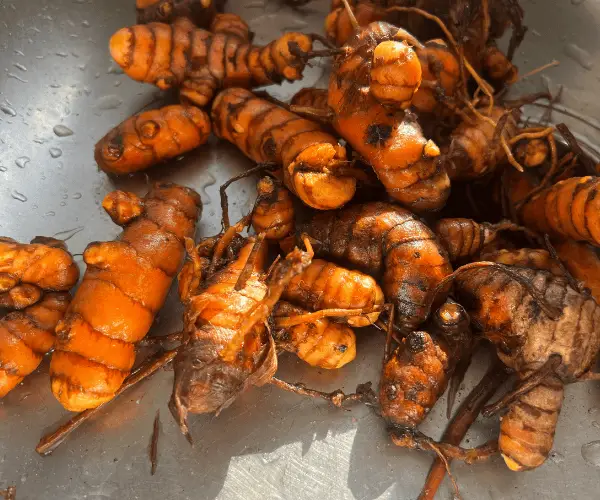
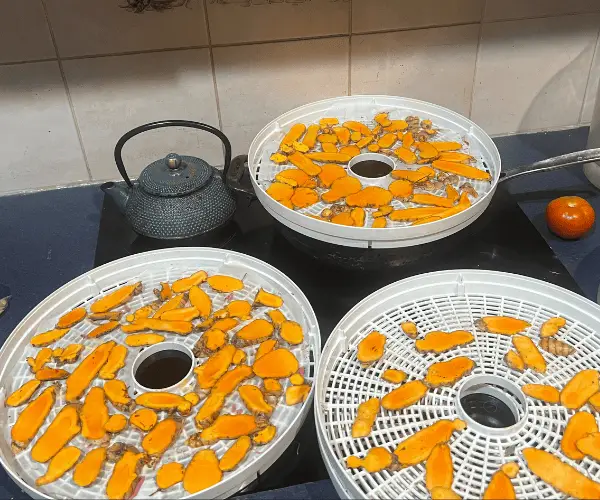
When I told him I needed some turmeric, he came back with the most beautiful golden-orange turmeric roots.
This particular harvest isn’t destined for our kitchen, though. We’re using the turmeric for the dogs and chicken feeds, making use of what the garden can provide for the animals that are such an important part of our homestead.
It is one of the things I love most about growing food here — the garden isn’t simply a place where we grow things to sell or eat. It becomes part of a much bigger cycle.
The garden feeds us, feeds the animals, supports insects and birds, and gives us ingredients to experiment with along the way.
Which brings me to my latest kitchen experiment…
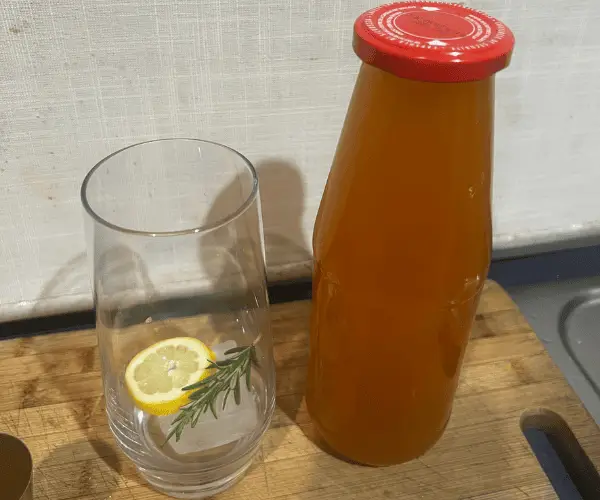
🍎 The Shrub I Didn’t Know I Needed
I’ve been curious about shrubs for a while but kept putting them off.
I’m not a huge fan of the tartness of kombucha, so I’d somehow decided that an apple cider vinegar shrub probably wasn’t going to be for me either.
I was wrong.
Very, very wrong.
Once I finally made one, I couldn’t believe how delicious it was.
A shrub is wonderfully simple: fruit, sugar and apple cider vinegar are combined and left for a couple of days to mingle before being strained and diluted with sparkling water.
No ginger bug to maintain. No complicated process. Just a few ingredients, a little patience and something delicious at the end.
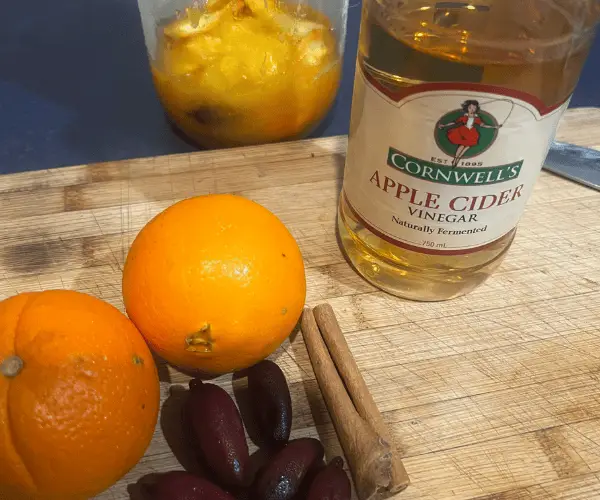
My first version was made with orange, fingerlime and Lemon Myrtle, and the combination was bright, citrusy and wonderfully refreshing.
🍊 Orange, Fingerlime & Lemon Myrtle Shrub
You’ll need:
- Juice of 4 oranges
- Rind from the oranges, removed in wide strips with no white pith
- 4 fingerlimes, sliced
- 1 teaspoon Lemon Myrtle leaves
- 1 cinnamon stick
- 1 cup sugar
- 1 cup apple cider vinegar
Add everything to a clean mason jar or jug and muddle gently to release the flavours.
Cover and stir several times throughout the day for 2–3 days.
Strain, then store refrigerated.
To serve, add approximately 1 tablespoon of shrub to a glass of sparkling water, adjust to taste and enjoy.
And because I immediately wanted to experiment again, I made a second version using apples.
🍏 Lemon Myrtle & Apple Shrub
For this version, simply replace the oranges, orange juice and fingerlimes with 4 diced apples.
Keep the Lemon Myrtle, cinnamon, sugar and apple cider vinegar from the original recipe.
Muddle, cover and stir several times a day for 2–3 days, then strain and serve diluted with sparkling water.
The apple version is softer and rounder, while the orange and fingerlime version has that lovely bright citrus lift.
I’d be hard pressed to choose a favourite.
If you make one, I’d love to know which version you try — and whether you discover your own favourite combination.
🌿 Another Week at Wildhorse
When I look back over the week, it feels like a collection of completely unrelated little moments — flowers blooming, kookaburras hunting around the birdfeeder, a South African braai, nine wet puppies, turmeric harvested from the garden and a new drink bubbling away in the kitchen.
But perhaps that’s exactly what homestead life is.
It isn’t one big project or one perfect harvest.
It’s the accumulation of small things.
A recipe remembered from family. A flower returning after winter. Puppies learning something new. A garden providing something we need. A kookaburra reminding us that every little change we make can have consequences beyond what we can immediately see.
And somewhere amongst all of it, there is usually something worth stopping to appreciate.
What has been happening in your little corner of the world this week? Has spring brought flowers, new life, warmer days — or perhaps something completely unexpected?
If you’d like to follow along with the seasons, the animals, the gardens and all the imperfect little adventures in between, you can also join the Wildhorse Homestead Circle. It’s where we share a little more of what happens behind the scenes here, along with stories, ideas and seasonal inspiration.
Come grow, relax and play with us at Wildhorse Homestead. 🌿
Thanks for spending another week with us.